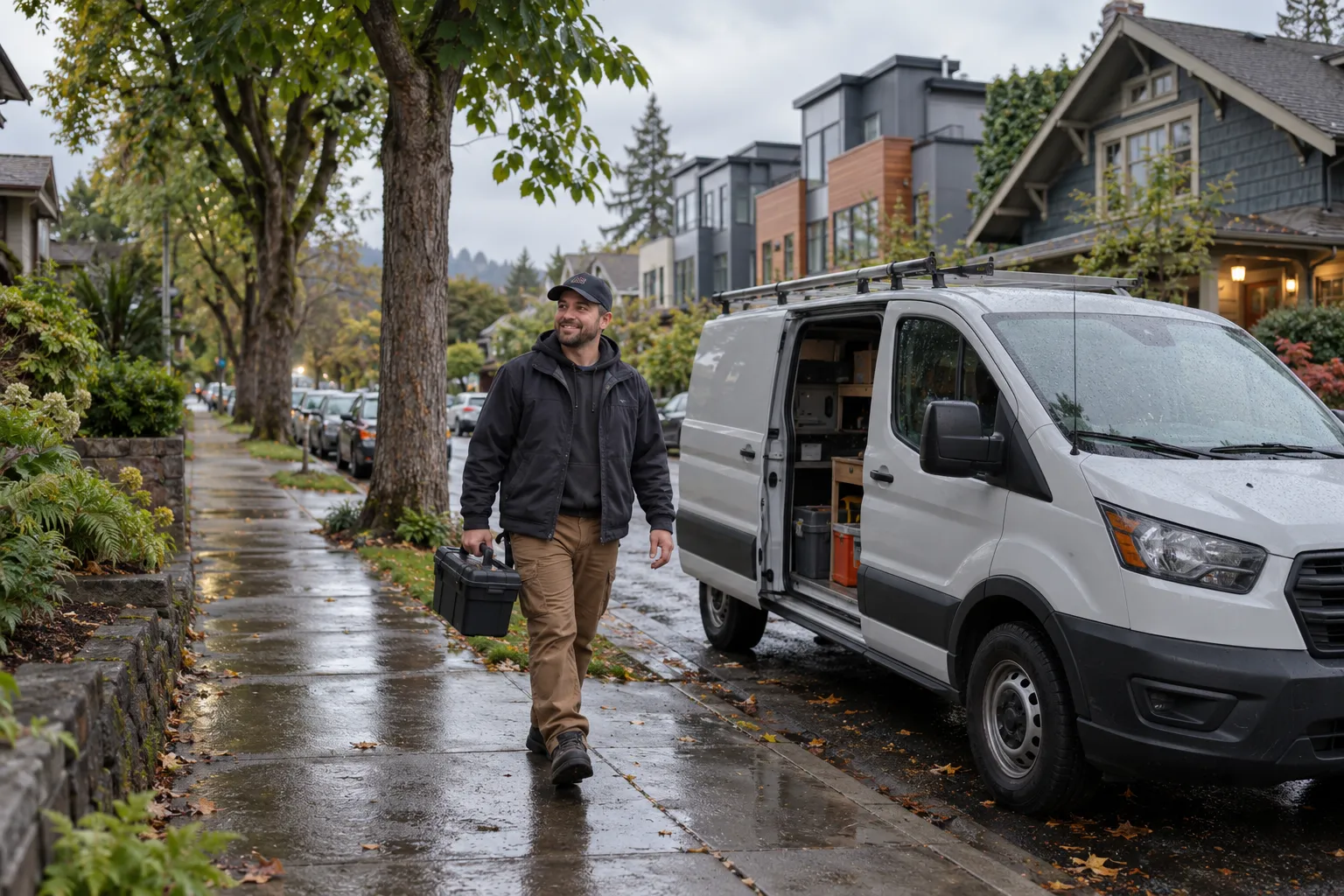
Need ac installation & replacement in Yelm?
Tell us what is wrong and when you are home. Request an estimate and a local provider will follow up. Prefer to talk? Request a callback to check provider availability.
No obligationRequest an estimate first
A worn-out air conditioner is a hassle for any household. It runs all the time, costs more to operate, and still leaves rooms stuffy. At some point, a new system makes more sense than another patch.
Lisasense Heating & Air is a referral service. We do not install or replace anything ourselves. Instead, we connect homeowners in Yelm and the Yelm area with independent providers in our network who handle the work. You describe your home and your schedule. A provider reviews the job and gives you a written quote. Then you decide. There is no obligation to move forward. Many wood-frame homes, older craftsman houses and newer townhomes in our region have different needs, so a good match matters.
Start with a short list. If you can say yes to two or more, a replacement may be worth pricing.
Some signs need attention soon. Look at these before anything else.
Turn the system off if you see water, smell burning or hear metal on metal. Then request help. Running a damaged unit can make the problem bigger.
Use this simple check. Ask a provider for both numbers in writing.
1. The cost of the repair. 2. The cost of a new system.
If the repair is a large share of the new price, and the unit is old, replacement often wins. If the unit is newer and the fix is small, repair may be enough.
Sometimes a part fails on a system that is otherwise sound. A provider may suggest emergency AC repair first, then plan a replacement later. That gives you time to compare quotes without rushing.
Next, learn the main options. Providers in our network may offer several.
Mild temperatures in our region mean many homes only need cooling for a few weeks. A heat pump can cover heating and cooling in one system. Ask the provider what fits your home.
Bigger is not better. An oversized unit turns on and off too often. It cools the air but leaves damp, clammy rooms. That matters in a wet region.
A unit that is too small runs nonstop and never catches up. A good provider measures your home first. They look at square footage, windows, insulation and sun exposure. Be wary of anyone who picks a size by looking at the old unit alone.
A full job usually follows this order.
1. Review of the home and the old system. 2. Removal of the old equipment. 3. Setting the new indoor and outdoor units. 4. Connecting lines, drains, wiring and the thermostat. 5. Testing the system and walking you through it.
Some jobs also need a permit, a new pad or electrical updates. Ask for these items on the quote.
Your house shapes the plan.
If you also search for furnace replacement near me, mention it. Some providers can quote heating and cooling together, which may save a second visit.
Efficiency ratings tell you how much cooling you get per unit of power. A higher number usually means lower running costs over time. It can also mean a higher purchase price.
Ask the provider to show both sides: the upfront price and the likely yearly running cost. In a mild climate, a very high rating may take longer to pay off. Use your own cooling needs as the guide.
Busy homes need a calm plan. Before the visit, decide these things.
Many installations take most of a day, though larger jobs can take longer. Ask the provider for an estimated time window and how they will protect floors and furniture.
The wet season brings steady rain, and rain can slow outdoor work. Mild spring and fall weeks are often easier to schedule than the first warm days of summer, when many households call at once. Planning ahead gives you more choices.
Bring this list to the first conversation.
1. How did you decide on the system size? 2. What brands and models are in the quote? 3. What is included in the warranty, and who handles claims? 4. Does the price cover permits, removal and disposal? 5. How long will the work take? 6. Will you check the ducts or drain lines?
Ask for the answers in writing. Then compare at least two quotes.
First, describe it. Next, request an estimate. Then compare what you get. If you want to talk it through, Request a callback to check provider availability.
A provider looks at your home's size, windows, insulation and ducts before suggesting a system.
The provider takes out the old equipment and handles disposal if it is in the quote.
Indoor and outdoor units are set, then connected with lines, wiring and drains.
The provider tests the system and shows you the thermostat and filter basics.
These are typical U.S. ranges. Real prices vary by home, system type, brand and local rules. Always get a written quote before you agree to any work.
| Item | Typical range | Notes |
|---|---|---|
| Central AC replacement | $4,000 – $12,000 | Depends on size and efficiency |
| Ductless mini-split (one zone) | $2,000 – $7,000 | Each added room costs more |
| Heat pump system | $5,000 – $15,000 | Heats and cools |
| Ductwork repair or changes | $500 – $5,000 | Crawl space ducts may need work |
| Thermostat upgrade | $150 – $600 | Smart models cost more |
| Permits and electrical updates | $200 – $2,000 | Varies by local rules |
Tell us about your home, your current AC and what is going wrong.
Send the form and share your preferred days and times.
A local provider reviews the job and gives you a written quote.
Pick a date that suits your household and the weather outlook.
You see a written quote before choosing anything, with no obligation to go ahead.
Describe the job, request an estimate, and get matched.
Local providers in our network do the work, not Lisasense Heating & Air.
You can share your schedule so the work fits around school and jobs.
Tell us what is wrong and when you are home. Request an estimate and a local provider will follow up. Prefer to talk? Request a callback to check provider availability.
No obligationLook at age, repair cost and how often it breaks. An older unit with frequent, costly repairs is often a good candidate for replacement.
Many installations take about one day, but it depends on the system, the ducts and the home. Rain, permits or extra electrical work can add time. Ask the provider for an estimated window.
Usually not for age or wear. Some policies may cover sudden damage, such as storm harm. Check your policy, and ask the provider to help document damage for a claim.
Tell us what is wrong and when you are home. Request an estimate and a local provider will follow up. Prefer to talk? Request a callback to check provider availability.
No obligation