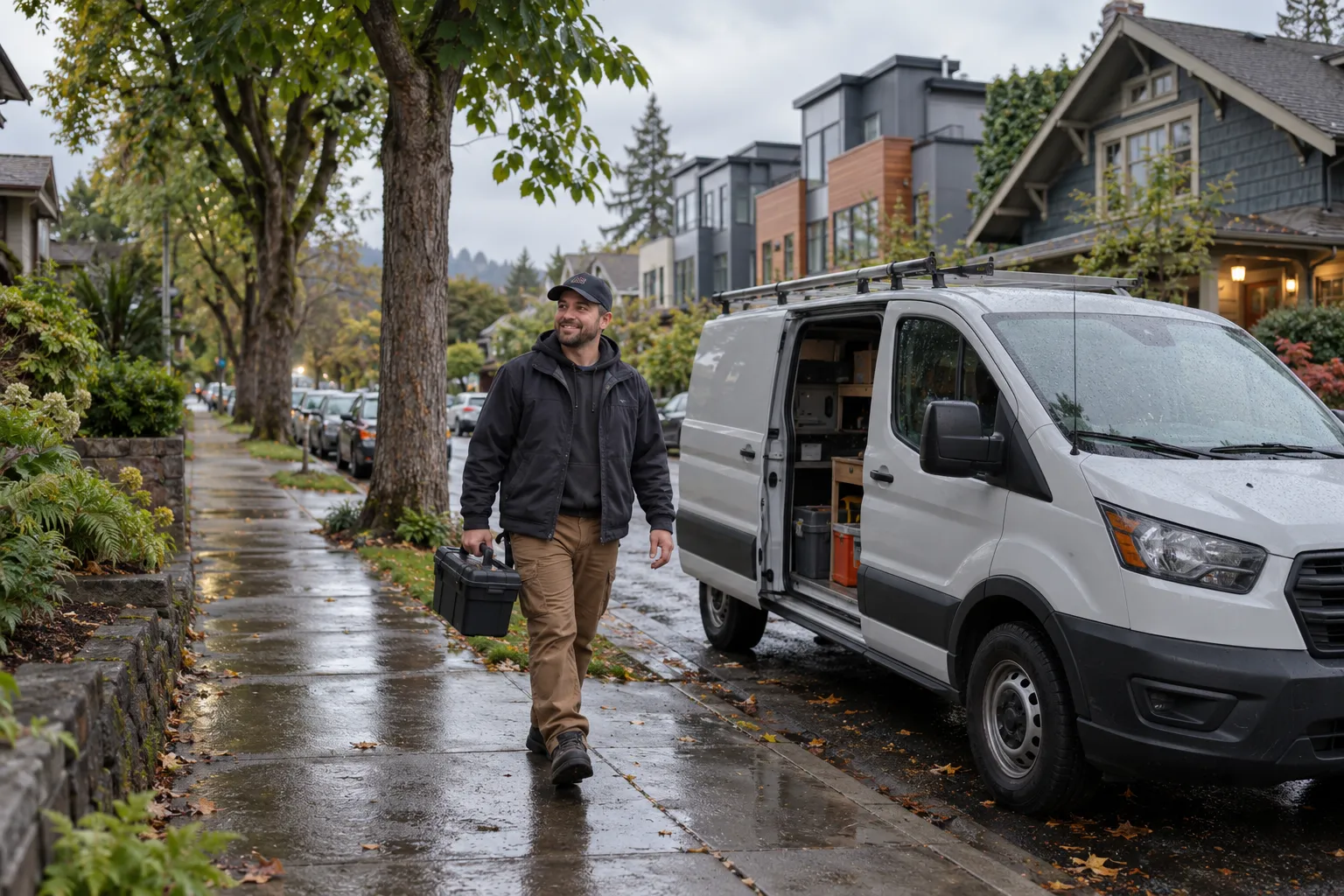
Need ac repair in Yelm?
Tell us what is wrong and when you are home. Request an estimate and a local provider will follow up. Prefer to talk? Request a callback to check provider availability.
No obligationRequest an AC repair estimate
A warm house is hard on a busy family. Kids need sleep, work still happens, and the schedule does not stop. Lisasense Heating & Air keeps the steps short. First, describe the problem. Next, request an estimate. Then you are matched with an independent provider in our network.
Lisasense Heating & Air is a referral service. It does not do the repairs. The provider you meet does the diagnosis and the work, and they give you a written quote. Mild, wet weather in the Yelm area means many air conditioners sit idle for months. Moss, damp and windblown debris can cause trouble before the first warm spell. This page walks you through what to check, what a visit looks like, and what to ask.
Warm air inside the house is stressful. Work through the list below. It takes about ten minutes, and it gives a provider useful facts.
Stand near the outdoor unit. Is the fan spinning? Do you hear humming, clicking or grinding? Then check the vents. Is the air weak, warm or damp? Write down what you notice. A few photos help too.
Turn the system off at the thermostat if you see ice on the pipes, water pooling near the indoor unit, or smell something burning. Running it can make the damage worse. Do not open electrical panels on the unit.
Not every problem is an emergency. Some are. Treat these as urgent:
Say so when you request an estimate. You can also Request a callback to check provider availability. Many providers can respond quickly, but openings and hours vary.
Use this as a quick scan. Two or more signs together mean it is time to ask for help.
Cool, wet months leave the AC idle for a long time. Damp air, moss and fallen needles settle on the outdoor unit. Windstorms can push branches against it. Then the first warm spell arrives, and every problem shows up at once.
Run the AC for a few minutes on a mild day, before you truly need it. If it fails, you have time to schedule a repair. You are not stuck waiting during a heat spike with everyone else.
A busy household needs a visit that fits the day. When you request an estimate, share your schedule. Mention school runs, work shifts, pets and nap times. Ask the provider for an arrival window and how long the visit may take.
Before the visit, clear a path to three spots: the indoor unit, the outdoor unit, and any crawl space door. Older craftson houses and newer townhomes can both have tight access. Tell the provider about attic hatches, shared walls and low crawl spaces.
1. Listen. The provider asks what you saw and heard. 2. Inspect. They check the thermostat, filter, coils, fan and wiring. 3. Test. They measure airflow, temperature drop and electrical readings. 4. Explain. You get the cause and a written quote. 5. Repair. With your approval, the provider does the work. 6. Confirm. They run the system and show you it is cooling.
Ask the provider to weigh these points with you:
If replacement looks likely, ask for a written replacement quote. Then you can compare both choices side by side.
If the job is large, ask for a second written quote. Check that both quotes describe the same work. Then decide with a clear head.
Prefer to start online? Use the form and describe what you see. Estimate first, then choose.
A provider finds the cause of warm air, weak airflow, odd noises or frozen coils.
Get the cause, parts and labor in writing before any work starts.
Fan motors, capacitors, contactors, thermostats and drain lines are typical fixes for providers.
Providers can locate leaks, repair them where possible, and recharge the system to the right level.
These are typical U.S. ranges. Your price depends on the part, the unit's age, and how hard it is to reach. Always ask the provider for a written quote before approving any work.
| Repair item | Typical range | Notes |
|---|---|---|
| Diagnostic visit | $75 – $200 | Some providers apply it to the repair |
| Capacitor or contactor | $120 – $450 | Common, smaller electrical part |
| Condensate drain clearing | $100 – $300 | Helps stop water leaks and ice |
| Fan motor replacement | $400 – $900 | Outdoor or indoor blower motor |
| Refrigerant leak repair and recharge | $200 – $1,500 | Varies with leak location and type |
| Compressor replacement | $1,200 – $3,000 | Replacing the whole unit may cost less overall |
Tell us what the AC is doing: warm air, strange noises, ice or water. Add your schedule.
Send the short form. Mention anything urgent, like a burning smell or leaks.
You are connected with an independent local provider who can look at your system.
Read the quote, ask your questions, and approve the work when ready.
You describe the problem and request an estimate before you commit to anything, so you can compare calmly.
Providers in our network are independent businesses who do the work and give you the quote.
Share your school runs and work hours so the visit can fit your day.
Describe it, request an estimate, get matched. No long forms or confusion.
Tell us what is wrong and when you are home. Request an estimate and a local provider will follow up. Prefer to talk? Request a callback to check provider availability.
No obligationCommon causes are a dirty filter, a dirty outdoor coil, low refrigerant or a failed part like a capacitor. Check the filter and clear debris first. If air stays warm, ask a provider to inspect it.
No. Turn the system off and let the ice melt. Running it while frozen can strain the compressor. Replace a dirty filter, then request an estimate if ice returns.
Burning smells, leaks into the home, or repeat breaker trips are urgent. Heat risk for young, elderly or ill family members is urgent too. Weak cooling on a mild day can usually wait for a scheduled visit.
Tell us what is wrong and when you are home. Request an estimate and a local provider will follow up. Prefer to talk? Request a callback to check provider availability.
No obligation